Book Appointment Now

📌 Types of Dentures
| Type | Description | Best For | Pros | Cons |
|---|---|---|---|---|
| Full Dentures | Replace all teeth in upper or lower jaw | People missing all teeth | Affordable, restores full smile | May feel bulky, requires adjustment |
| Partial Dentures | Replace several missing teeth | Those with some natural teeth left | Prevents shifting of remaining teeth | Less stable than implants |
| Implant-Supported Dentures | Anchored to dental implants | Patients seeking more stability | Stronger bite, less slipping | More expensive, requires surgery |
| Immediate Dentures | Placed right after tooth extraction | Patients who don’t want a gap | Instant replacement | May need relining as gums heal |
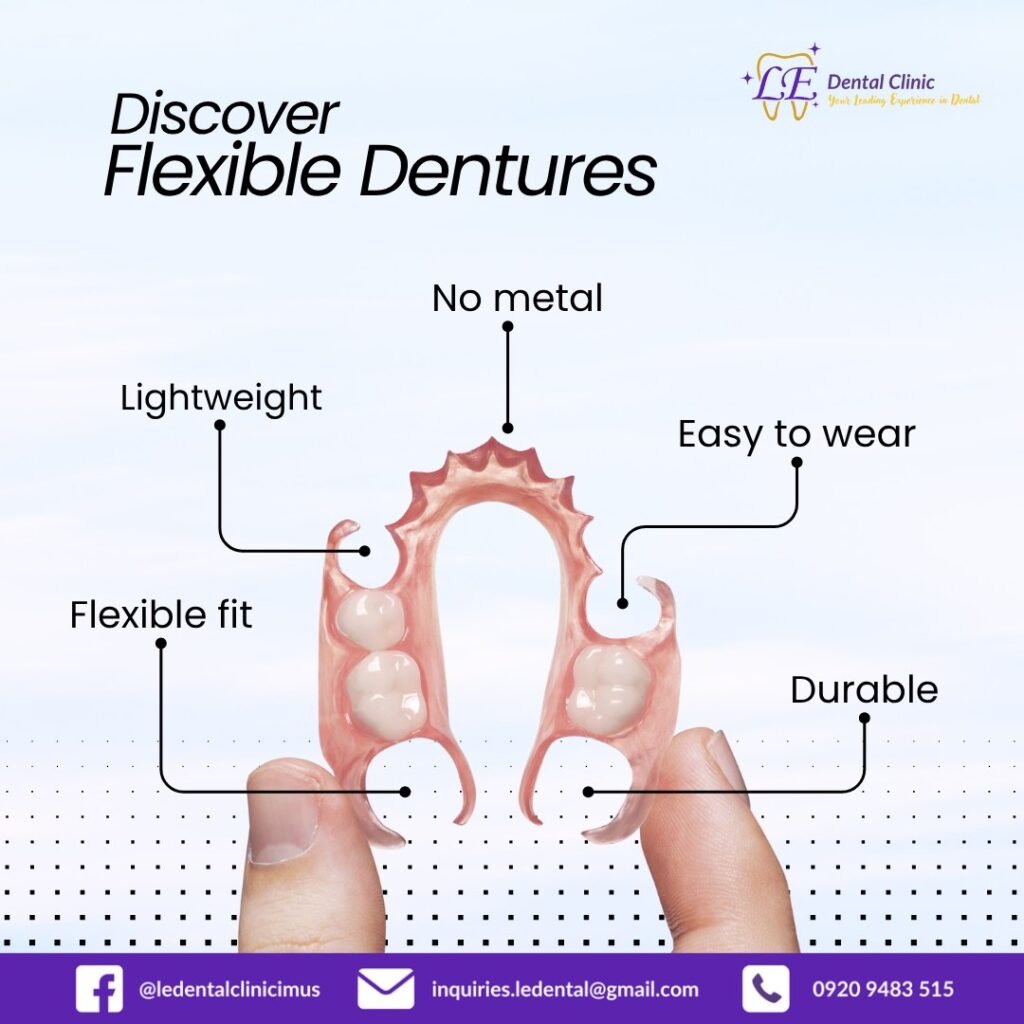
| Flexible Dentures | Made of softer nylon material | People allergic to acrylic | Comfortable, lightweight | Less durable, harder to repair |
✅ Benefits
- Restores ability to chew and speak clearly.
- Improves facial structure by preventing sagging.
- Boosts confidence with a natural-looking smile.
- Cost-effective compared to implants or bridges
🧾 Care & Maintenance
- Clean dentures daily with a soft brush and non-abrasive cleanser.
- Soak overnight in denture solution to keep them moist.
- Avoid hot water (can warp dentures).
- Visit dentist regularly for adjustments and relining.